
Dialysis Equipment Market
Dialysis equipment stands at the forefront of renal care innovation, empowering patients with chronic kidney disease to manage treatments more effectively through hemodialysis and peritoneal systems. These vital machines filter waste from blood when kidneys fail, supporting both clinic-based and home therapies that enhance quality of life.
Check valuable insights in the Dialysis Equipment Market report. You can easily get a sample PDF of the report – https://www.businessmarketinsights.com/sample/BMIPUB00031627?utm_source=OpenPr&utm_medium=10457
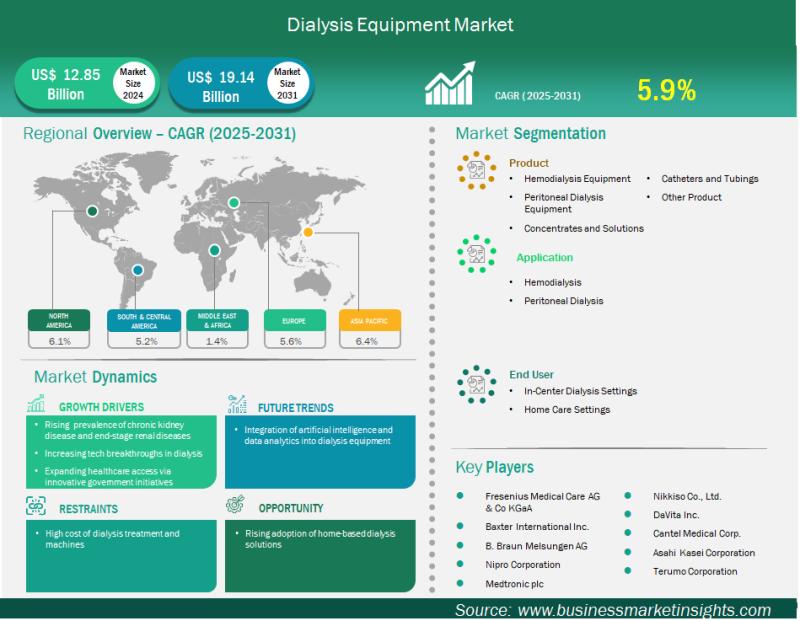
The dialysis equipment market size is expected to reach US$ 19,135.73 million by 2031 from US$ 12,846.81 million in 2024. The market is estimated to record a CAGR of 5.9% from 2025 to 2031.
Dialysis Equipment Advancements-
Healthcare providers increasingly turn to dialysis equipment for its role in treating end-stage renal disease amid rising diabetes and hypertension cases worldwide. Recent breakthroughs focus on portability and user-friendliness, allowing patients greater independence from dialysis centers.
These updates align with dialysis equipment market trends emphasizing wearable tech and IoT integration for remote oversight, reducing hospital visits and complications. As aging populations grow, manufacturers prioritize ergonomic designs that ease caregiver burdens and improve adherence. Nephrologists praise how such innovations transform routine therapies into seamless experiences, fostering better outcomes in diverse settings.
Rising Adoption of Home-Based Dialysis Solutions-
Traditionally, patients received dialysis in hospitals or clinics, necessitating multiple trips in a week for treatment. However, momentum is building towards home-based dialysis (HBD), with home hemodialysis (HHD) and automated peritoneal dialysis (APO), as it’s been shown to not only improve quality of life but reduce strain on the healthcare system. In the United States, approximately 14% of dialysis patients choose home-based treatments, and that number is expected to expand with technology and reimbursement practices.
Canada and Australia have also adopted home dialysis programs that government agencies have supported to allow patients to thrive independently. The advancement of dialysis using portable, wearable devices 15, which allows patients to receive treatment at different locations, has been a huge boon and a big reason for the growth of HBD. Real-time monitoring devices using artificial intelligence (i.e., AI integrated into home dialysis machines) have allowed for better monitoring of patients’ health, reduced complications, and reduced hospital visits. As policymakers and healthcare providers continue to focus on cost-effective and patient-centered care, the home dialysis 15 section represents a huge growth potential area for manufacturers of home dialysis solutions, and added impetus to continue developing and innovating compact, intuitive, and automated products for dialysis patients.
Access Full Report with TOC @ https://www.businessmarketinsights.com/reports/dialysis-equipment-market
Driving Market Forces-
The dialysis equipment sector benefits from heightened awareness of kidney health, spurring demand for efficient, reliable devices across hospitals and homes. Home dialysis gains momentum due to lifestyle flexibility and cost savings, with peritoneal options leading in patient preference for overnight cycles. Technological shifts toward miniaturization and automation address longstanding challenges like treatment fatigue and infection risks.
End-users favor hemodialysis dominance for its proven efficacy in acute care, yet peritoneal systems expand in chronic management. Regulatory bodies like the FDA streamline approvals for next-gen portables, boosting accessibility in underserved regions. Sustainability efforts emerge, with reusable components and eco-friendly disposables appealing to green-focused providers.
Rising Prevalence of Chronic Kidney Diseases and End-Stage Renal Diseases Driving Dialysis Equipment Market-
Chronic kidney disease (CKD) affects roughly 850 million people around the world, and about 10% of the population globally will face some form of kidney disease. The burden of CKD is large, especially in cases with older populations and rising diabetes and hypertension incidences-these diseases are primary contributors to kidney failure. In the United States (US), there are approximately 37 million adults with CKD, with over 800,000 adults currently living with end-stage renal disease (ESRD), and need either dialysis or kidney transplantation. In China, the prevalence of CKD is estimated between 10% and 12%, totalling over 120 million people, and in India, there are approximately 1.75 million patients who require dialysis each year.
Market Analysis to 2031-
Global Trends: Dialysis equipment market expands steadily via home therapy adoption, AI monitoring integration, and portable designs; hemodialysis maintains lead in clinical volumes.
Market Share Insights: Hospitals hold primary share through high utilization, while home care segments surge with tech-enabled independence; Fresenius and Baxter command significant portions.
Key Trends: Rise of wearable dialysis prototypes and automated peritoneal cyclers; focus on IoT for predictive maintenance; growing emphasis on patient-centric ergonomics.
Forecast Outlook: Home-based systems project fastest trajectory to 2031, driven by miniaturization; overall growth ties to CKD prevalence and telehealth synergies.
Global Analysis: North America dominates with robust infrastructure and reimbursements; Asia-Pacific accelerates via infrastructure builds in India and China.
Regional Highlights: Europe advances sustainable models amid green regulations; Latin America and Middle East prioritize affordable hemodialysis amid rising needs.
Future Opportunities-
Opportunities abound in emerging economies where government programs expand dialysis access, paired with digital platforms for remote monitoring. As precision renal care evolves, dialysis equipment remains indispensable, bridging gaps in chronic disease management.
One of the primary drivers of the market is the rising prevalence of chronic kidney diseases and end-stage renal diseases. With the rise in chronic kidney diseases and end-stage renal diseases cases, there is an increasing need for dialysis. The burden is particularly high in regions with aging populations and rising incidences of diabetes and hypertension, which are leading causes of kidney failure. Therefore, the growing burden of kidney-related diseases drives the dialysis market. Similarly, the increasing tech breakthroughs in dialysis, is another key contributor to rising demand for dialysis equipment.
Get Premium Research Report of Dialysis Equipment Market Size and Growth Report at: https://www.businessmarketinsights.com/buy/BMIPUB00031627?utm_source=OpenPr&utm_medium=10457
Contact us:
If you have any questions about this report or would like further information, please contact us:
Contact person: Ankit Mathur
Email: sales@businessmarketinsights.com
Phone: +16467917070
About Us:
Business Market Insights is a market research platform that provides subscription service for industry and company reports. Our research team has extensive professional expertise in domains such as Electronics & Semiconductor; Aerospace & Defense; Automotive & Transportation; Energy & Power; Healthcare; Manufacturing & Construction; Food & Beverages; Chemicals & Materials; and Technology, Media, & Telecommunications.
This release was published on openPR.

