
Table of Contents
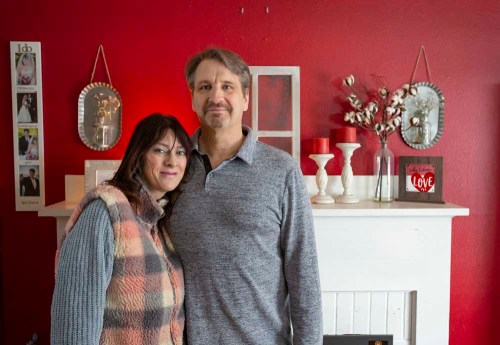
Ron Simmons is on life support while he waits for a miracle and his wife saves up to visit him
PENDLETON — Tick, tick, tick — time ticks away while Ron Simmons continues to wait for a viable donor for a heart transplant. And now he also needs a lung.
When the Pendleton man was diagnosed with chronic systolic heart failure and ventricular tachycardia, a team of specialists at Providence Spokane Heart Institute determined he was a candidate for a heart transplant. That was in January 2021.
“Ron’s heart has continued to worsen, so doctors say it’s critical in order to survive,” his wife, Denise Simmons, said during a February 2021 interview with the East Oregonian.
Fast forward to Nov. 18, 2025, when Ron experienced another cardiac crisis. When Ron got home from work at Safeway, where he’s been employed for about nine years, he told Denise he hadn’t felt well all day.
‘It’s just been a rollercoaster’
“He wasn’t even home 10 minutes and he started getting shocked from the defibrillator,” Denise said. “It kept shocking and shocking him. It was very scary.”
While trying to remain calm, she called an ambulance. Denise said shortly after Ron arrived at CHI St. Anthony Hospital, medical staff determined that he needed special cardiac care.
“They kept doing CPR on him because he didn’t have a pulse. It was the most horrible thing to watch,” Denise said. “They had 10 people taking turns because they had to keep doing CPR.”
While trying to stabilize Ron for transport to Portland, other hospital personnel gently informed Denise to prepare herself.
“They told me that when he was being (taken by air ambulance), he might not even make it to the hospital,” Denise recalls. “It’s just been a rollercoaster since he went to the hospital on the 18th of November.”
Ron had been working with a team at Providence Sacred Heart in Spokane for his heart transplant. While the facility has done heart-lung transplants, the program was paused in November 2025 because of staff shortages.
“At first, they said he just needed a heart,” Denise said, “and then his lungs started getting really bad and now he needed both.”
Heart and lung transplants are challenging, relatively dangerous surgeries. They take upward of 12 hours to complete, depending on the complexity of the transplants.
The medical teams in Portland and Spokane determined Ron could get the care he needed at Stanford Health Care’s Heart-Lung Transplant Program at Palo Alto, California. A pioneer program, Stanford is recognized for performing the first successful long-term heart-lung transplant in 1981.
Denise said he arrived at the California hospital on Jan. 1 and officially has been on the heart-lung transplant list since about Jan. 8.
Cardiac care is costly
When Ron was first faced with the need for a heart transplant, the couple was told the estimated cost would be more than $1 million. While he had medical insurance and now has Medicaid, their portion of medical bills and transportation costs will add up quickly.
In addition, Ron will be required to live near the transplant facility for at least three months after the surgery.
Denise said they’ll be renting an apartment close to the hospital. The cost through Stanford Hospital isn’t a lot, she said, about $20 per day, but that adds up over three months to about $1,800, and it doesn’t account for the cost of groceries, flights and other necessities — that’s on top of expenses associated with maintaining their family home in Pendleton.
The couple was introduced to a fundraising campaign coordinated by the National Foundation for Transplants, which began accepting tax-deductible donations on Ron’s behalf in February 2021, about a month after he was initially put on the transplant list.
The nonprofit organization based in Memphis, Tennessee, has served as a fundraising entity for wraparound costs associated with organ transplants. Denise estimated more than $4,000 should have been in their account through NFT. But the foundation closed in April 2024 after operating for 41 years.
The Simmons family never received notification. Denise found out the money was gone when she reached out for assistance on filling out a reimbursement form. After being sent straight to voicemail and receiving no callback, she tried another number and finally learned the money couldn’t be accessed.
“There were a lot of family members of ours who donated that way and they were pretty upset,” Denise said. “We did not get any of it, not a dime. After that, they said they would donate directly to us.”
One such family member is Ron’s sister, Vickie Saling. Saling lives about 45 minutes away from Stanford. She’s a self-described “prayer warrior” who visits Ron about every other day, rotating with his son. Saling said sometimes, Ron will squeeze her hand while she tells him stories or reminisces on their childhood and “he squeezes my hand and I know he’s there.”
Ron is a fighter, Saling said. Doctors on Jan. 12 diagnosed him with candidiasis, a yeast infection in his blood that requires medication and monitoring. It should be treatable and likely is not a condition that will exclude him from the transplant list. Saling said they’re waiting on blood test results to see if the medicine is working.
Saling said despite being an organ donor even before her brother’s addition to the transplant list, seeing him sedated in the hospital on a ward full of people in need of transplants gave her a new appreciation for the choice. Still, she added, it’s hard to reconcile her prayer for a transplant match with the understanding that what she’s hoping for is someone else to die.
“You are amazed that people are that generous, becoming a donor, you know, and how many lives they can change,” she said. “If you go down his ward, there’s 48 people in that ward. You think about all the wards all over the United States, that’s a lot of people (who need organs).”
Saling said Ron was “very clear that he’s not ready yet” before he was sedated. His choice to fight leaves Denise with no choice but to come up with the funds needed to support him, which is where their community comes in.
‘He’s my best friend’
After Ron’s most recent cardiac event in November, the couple’s friend started a new donation campaign — a GoFundMe — to cover transportation costs and bills.
Candis McClure, a Pendleton business owner and close friend of Denise and Ron, was in the hospital next to Denise when the staff was performing CPR. She then drove Denise to Portland while Ron took the air ambulance, arriving around 3 a.m. with her friend.
“It was a horrible sight,” McClure said. “There’s tubes coming from everywhere and every time they wake him up, he goes into V-fib, so his heart and lungs are completely shot.”
So far, the GoFundMe has raised about $1,900, which has gone toward transportation and meal costs.
The pair have a 28-year-old daughter who requires full-time care due to brain damage. Denise is her primary caregiver and doesn’t have another job. She can’t work as the primary caregiver for her daughter when she’s at Ron’s bedside, so she continues losing weeks’ worth of paychecks.
McClure said Denise visited Ron in Portland as much as she could, but she also needed the money she earns from caregiving to continue seeing Ron and taking care of their family in Pendleton.
“It’s a financial wreck, so that’s why I set (the GoFundMe) up,” McClure said. “There’s still hope. He’s just waiting for that lung and heart transplant.”
Denise said she and Ron love to try different restaurants, go fishing and watch movies together. Before Ron’s recent health challenges, they were saving for a trip to Hawaii. Now, though, their money mostly goes to Ron’s medical care and Denise’s travel to see him. She hopes they can reschedule their plans.
“He’s a very strong person; he believes in God. He’s died multiple times, but he doesn’t want to leave me. We’re partners in crime,” Denise said. “I love him so much. He’s my best friend.”
Donations can be made to support Ron and Denise at tinyurl.com/69dd59k7.

