
Table of Contents
By Jin Yan, Vision Times
A new investigative report warns that the Chinese Communist Party’s (CCP) extensive control over China’s medical establishment has left doctors with little ability to challenge suspected organ transplant abuses, raising new concerns about the absence of independent oversight and accountability.
Published on Oct. 20 by the “International Coalition to End Transplant Abuse in China” (ETAC), the report examines how the CCP’s authority extends across hospitals, transplant oversight bodies, ethics committees, and professional medical associations.
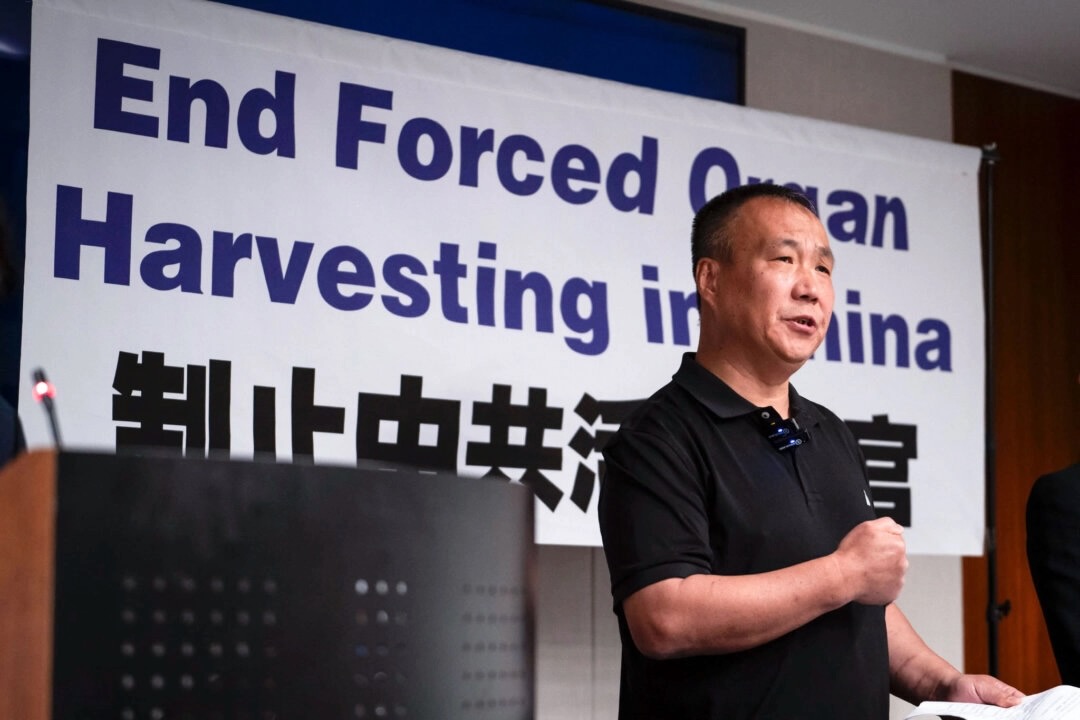
Chinese human rights lawyer Wu Shaoping, chairman of the Overseas Chinese Human Rights Lawyers Alliance, told Vision Times that the political structure makes meaningful independent oversight virtually impossible, allowing alleged abuses to remain concealed.
RELATED: Passage of S.4009 Opens Door to Sanctions Over Forced Organ Harvesting
Party committees dominate hospital governance
Success
You are now signed up for our newsletter
Success
Check your email to complete sign up
The report, authored by China human rights researcher Sarah Cook, argues that organizations presented by Beijing as independent regulators are ultimately subject to the same Party-controlled hierarchy. “Every entity that Chinese officials present to international audiences as ostensibly independent or as a ‘third party’ is in fact a node in the same Party-controlled system,” Cook said.
According to the investigation, CCP committees embedded within Chinese hospitals exercise authority over major decisions, personnel appointments, and disciplinary matters, placing Party secretaries above hospital directors and clinical administrators.
Professional bodies, including the Chinese Medical Association and the Chinese Medical Doctor Association, also operate under Party supervision rather than functioning as independent watchdogs, the report found. Cook further warned that physicians who are CCP members must pledge lifelong loyalty and secrecy to the Party, potentially placing political obligations above their professional and ethical responsibilities.
The report cites the suppression of early COVID-19 warnings by Wuhan physician Li Wenliang as an example of how political pressure can discourage medical professionals from speaking publicly.
Transplant surgeons’ political ties raise concerns
ETAC identified 19 cases across 12 provinces involving transplant surgeons or transplant center directors who were also CCP members. Six held senior Party leadership positions within their hospitals. The investigation highlighted surgeons working in China’s remote Xinjiang and northeastern provinces where Uyghurs and Falun Gong practitioners have faced widespread detention or persecution.
Researchers also examined the national organ transplant oversight structure, noting that 17 of the 33 individuals on the latest publicly available membership list, from 2016, were confirmed CCP members. Two were affiliated with the Central Military Commission’s Logistic Support Department.
The report argued that such institutional relationships undermine claims that China’s transplantation system is subject to independent scrutiny. It also raised concerns about hospital ethics committees, whose membership and review procedures are often not publicly disclosed.
A former physician from Liaoning Province who fled China reportedly told researchers, “If you dare to speak out, you’ll be the next one to disappear.”
Independent oversight needed
Wu Shaoping agreed with the report’s assessment, arguing that genuinely independent medical ethics review boards cannot operate within China’s centralized political system. “If such institutions existed, China’s organ transplantation system would basically be unable to continue operating,” he told Vision Times.
Wu claimed that regulations governing organ transplantation primarily provide a legal framework for practices already controlled by the authorities, while ethics committee members remain dependent on the institutions they are expected to oversee. He also expressed concern about the lack of public trust in organ donation, saying some Chinese citizens fear that consenting to donate organs could expose them to abuse.
Regarding medical professionals, Wu distinguished between doctors who may feel compelled to participate in unethical practices and those who knowingly pursue financial benefits. He argued that few physicians have the ability or willingness to resist pressure from powerful institutions.
Wu also identified Falun Gong practitioners and other prisoners of conscience as a major victim group. Falun Gong, also known as Falun Dafa, is a spiritual practice rooted in the principles of Truthfulness, Compassion, and Forbearance. Despite being peaceful in nature, the CCP launched a brutal campaign to eradicate the practice in July 1999 after seeing its rapid rise in popularity as a threat to its authoritarian regime. Since then, thousands of practitioners have perished at the hands of Chinese police, with many today still undergoing routine monitoring, arbitrary travel bans, and arrests.
In 2019, the independent London-based China Tribunal found that forced organ harvesting had occurred in China on a significant scale, identifying Falun Gong practitioners as a principal source of illegally harvested organs. Meanwhile, Beijing has denied allegations of systematic forced organ harvesting and maintains that its transplant system relies on voluntary donations.
US legislation targets forced organ harvesting
The report comes amid growing legislative efforts in Washington to address alleged organ transplant abuses. On Sept. 28, the U.S. Senate unanimously passed S.4009, the bipartisan Falun Gong and Victims of Forced Organ Harvesting Protection Act.
The legislation would require the U.S. government to examine China’s organ transplantation policies and practices, report its findings to Congress, and identify foreign individuals implicated in forced organ harvesting. It would also authorize targeted sanctions, including asset freezes and visa restrictions, against those found responsible. The Senate-approved measure must still clear the House before it can be sent to the president to be signed into law.
Wu welcomed the legislation as a potential precedent for other countries, urging governments to strengthen their laws, coordinate investigations, and cooperate on enforcement efforts to combat illicit organ trafficking.

