
Table of Contents
At nearly 15 weeks into her pregnancy, Catherine Mornhineway thought she was attending a routine appointment. Instead, she and her longtime partner, Andrew Ford, learned that their unborn daughter had a rare and fatal congenital condition. It was a diagnosis that brought heartbreak, but also set the stage for a remarkable story of love, courage, and hope.
“I remember sitting in the ultrasound room,” Mornhineway, 30, tells TODAY.com. “Our hearts dropped. They said there was nothing to be done. Most people terminate.”
Mornhineway and Ford, 32, were told that their baby girl, whom they would name Haven, had anencephaly, a severe birth defect in which major portions of the brain, skull and scalp do not fully develop. The condition affects an estimated 1 in 10,000 newborns in the United States, according to the Cleveland Clinic.
In the days that followed, the Florida couple struggled to process the news. The shock was overwhelming, Mornhineway said, and grief set in almost immediately.
“All we knew was that our hearts were broken,” she says.
A Search For Answers
As they began grappling with what came next, Mornhineway said she found herself searching for answers wherever she could.
In one such moment, while scrolling through Instagram, she came across an old episode of “Grey’s Anatomy.” The storyline centered on a pregnant character whose baby had been diagnosed with anencephaly and who chose to carry the child to term so the baby’s organs could be donated.
The timing felt almost unbelievable.
“It made me wonder if that was something we could do,” Mornhineway recalls. But she knew it was not a decision she could make alone. Ford would need to be on board.
Ford tells TODAY the idea initially caught him off guard. His first instinct, he said, was to dismiss it. After sitting with the possibility, however, it no longer felt strange — it felt right.
“I remember thinking that our devastation could become something beautiful,” Ford says.
How Organ Donation Works
Turning that hope into reality would not be simple. Organ donation in cases of anencephaly is uncommon and highly complex, dependent on timing, medical coordination and the availability of a recipient.
After raising the possibility with their care team at HCA Florida Brandon Hospital, Mornhineway and Ford were connected with LifeLink, one of four organ procurement organizations that serves the state.
LifeLink made it clear that donation was far from assured. In cases of anencephaly, infants often survive only minutes or hours after birth, and the window for organ recovery is narrow.
“We understood that this might not work,” Ford says. “But we felt like this was the right thing to do, no matter what. It gave us something to hold on to. Even if nothing came out of it, we knew we were doing everything we could.”
What stood out immediately, said Laurie Van Damme, a nurse navigator with the hospital’s high-risk pregnancy team, was “their courage and the way they leaned on each other.” Each decision they made, she said, “was guided by love for their daughter.”
The months that followed were shaped by ordinary routines, carried out alongside the knowledge of what lay ahead. They named their baby Haven, a name that reflected both refuge and hope.
A Last-Minute C-Section
The plan had been for a vaginal delivery. But in the final days before labor, Haven shifted positions, turning head-up — a change that required a cesarean section.
“She flipped at the very last minute,” Mornhineway says. “We really believe she understood that a C-section was the only way she would survive the birth.”
Haven Sariah Renee Ford was born on Dec. 11, weighing 6 pounds. More than a dozen medical staff members were present in the operating room, including obstetricians and nurses, neonatal specialists, anesthesiologists and representatives from LifeLink.
From the beginning, Haven defied expectations.
Doctors had warned that babies with anencephaly often die in utero or survive only minutes or hours after birth. Haven was born alive — crying, even — and continued to breathe on her own, a moment that stunned those in the room. She lived for several days, long enough for her parents and siblings to hold her, sing to her, and say goodbye.
“She was strong,” Ford says. “From the moment she arrived.”
LifeLink was able to recover Haven’s heart valves, which will be used to help multiple children. Her corneas were also donated, and her placenta was given for tissue recovery, where it will be used to help burn victims and other patients in need of grafts.
Introducing Baby Haven To Her Siblings
Explaining Haven’s story to their children was among the most difficult conversations the Mornhineway and Ford faced. For their oldest daughter, Chloe, 12, they chose honesty.
“We told her Haven would be here for a short time,” Mornhineway said, “and that she would help other babies before going to back to heaven.”
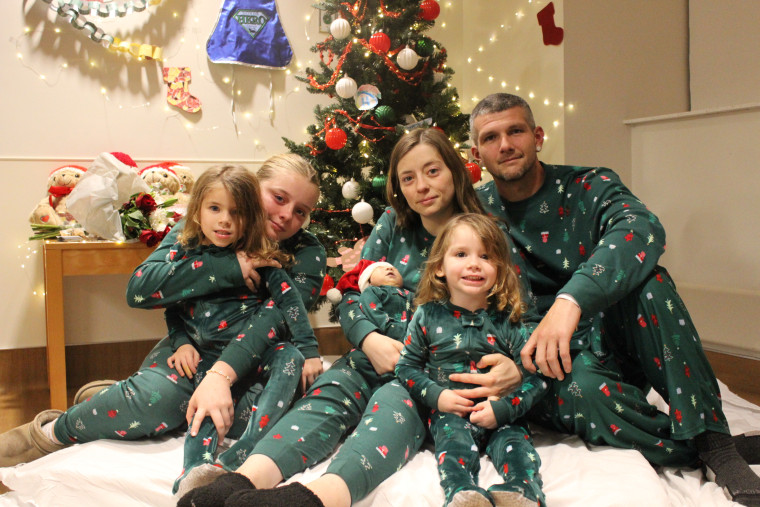
Chloe, they said, understood more than they expected. At the hospital, she spent hours holding her sister’s hand and helped paint Haven’s fingernails and toenails, matching her own. The couple’s younger children, Raeya, 4, and Malakai, 2, were told in simpler terms. They were introduced to their new sibling, encouraged to talk to her and cuddle her.
“We wanted them to know her,” Mornhineway says. “Even if it was just for a little while.”
‘It Was Kind Of Like Haven’s Mission’
On the morning of Dec. 13, a team escorted the family to the hospital’s Pregnancy and Infant Loss Remembrance Garden, where Mornhineway and Ford read a letter they had written to their daughter, Later that day, Haven was taken off life support and spent her final hours cradled in her parents’ arms, surrounded by love.
“This family is phenomenal,” says Kelly Cullen, chief operating officer of the LifeLink Foundation. “We don’t often hear about mother’s carrying babies to term with the sole purpose of donating the baby’s organs.”
Thanks to families like Haven’s, Cullen adds, organ donation offers “the opportunity for more memories with loved ones for the thousands who are waiting for their second chance
For Mornhineway and Ford, that possibility traces back to the day the “Grey’s Anatomy” clip appeared on social media, offering a path forward when they felt lost.
“We believe that was meant to happen,” Ford says. “That our devastation would become someone else’s miracle.”
Mornhineway agrees. “It was kind of like Haven’s mission,” she says. “This is what she was here to do.”

