
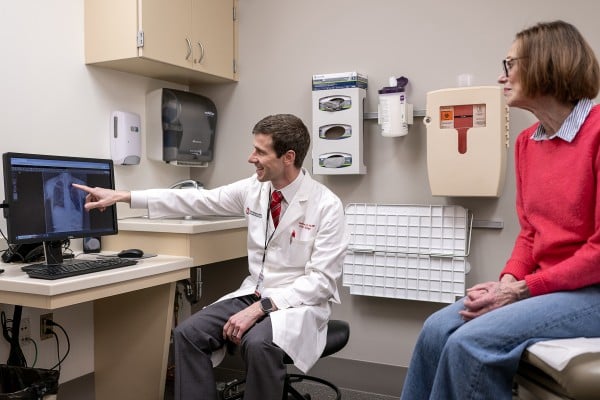
Newswise – Columbus, Ohio – Three years ago, Ann Sidesinger was able to walk 10 feet. Idiopathic pulmonary fibrosis caused my lungs to become thick and stiff. Even with the oxygen tank, it was difficult to breathe in.
“When you can't breathe, everything is such an effort, just not having the energy,” Sidesinger said. “I wake up with a fearful thought. I have to spend this day, and I don't want to do that because it's so difficult.”
Her world has become smaller as pulmonary disease worsened for Ohio residents. She had to trade trail hikes for a walk around the neighborhood. When she left the house, she relied on grocery and meal delivery services to meet her needs. Going up and down the stairs in her house was a job she could only work on once a day.
“It took more and more oxygen to move from bed to bathroom,” Sidesinger said. “I was breathless and I was taking oxygen.”
Sidesinger's pulmonary surgeon introduced her Ohio State University Wexner Medical Center Comprehensive Transplant Centershe underwent a double lung transplant surgery in September 2022.
National lung transplant rates rise, but remain lower than other organs
Lung transplantation is considered for people with terminal lung disease if other treatment options fail. Lungs are the most challenging organ for transplantation, as they are prone to fragility. Less than 30% of all donor lungs meet the criteria for implantation.
“We carefully evaluate donors' lungs to reduce the likelihood of health risks after transplantation,” he said. David Nunley, MDMedical Director of Lung Transplantation and Professor of Internal Medicine Ohio State University School of Medicine. “We look at donors, blood and tissue compatibility, imaging, smoking history, chest trauma and lung health age to make it optimal for our patients.”
A large team of transplant respiratory surgeons, cardiothoracic surgeons, transplant nurse coordinators, transplant pharmacists, transplant social workers, transplant psychologists, physiotherapists and transplant nutritionists are involved in the care of lung transplant patients.
“Our approach here is that we always treat patients in a way we want to be treated ourselves and take a lot of pride in our interdisciplinary approach.” Matthew Hen, MDheart and lung transplant surgeon and assistant professor of surgery. “We have hundreds of people caring for these patients, both before and after implantation.”
According to the Organ Procurement and Transplant Network, the number of lung transplants performed in the United States has increased from 1,925 in 2014 to 3,370 in 2024 over the past decade.th In the country.
“The number of lung transplants is on the rise, but there are more donors nationwide,” Henn said. “The more donors we have, the more we can help.”
Lung transplants improve and extend lifespan
Two years after surgery, the quality of life in the side jar has improved significantly. My retired grandmother regularly went for walks, exercised at a local community center, hiking the mountains of Colorado and the Dominican Republic.
“The goal of transplants is to bring the patient back to a place where he can live his life,” Henn said. “When I see a patient in the office after an implant, I get hit often. To be truly happy to see a patient recover and return to life, I am extremely pleased with our program.”
April is the National Donation Life Month to recognize the need for more organ donors and encourage people to become registered organ donors and to honor those who saved their lives through donations.
“I don't complain anything because you can't do the little things every day, the mundane things of your life, so you can now, so you shouldn't just take the obvious,” Saidjar said. “I'm very grateful to have these lungs and I'm grateful to all the people who donate their organs. I'm very grateful and that makes a lot of sense.”
For more information on organ donation, please see. wexnermedical.osu.edu/buckeye4life.
###

